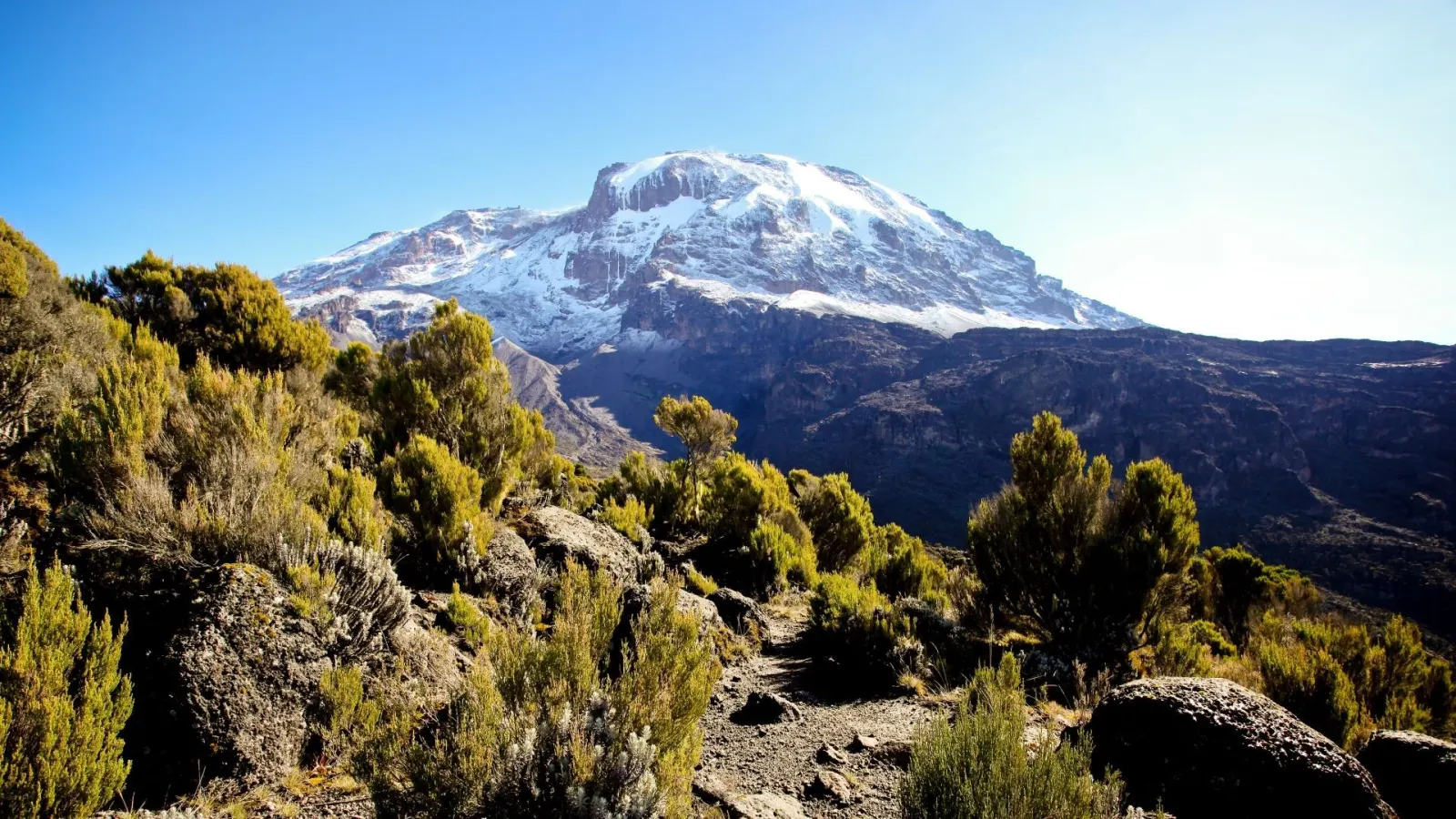
Marangu Route 6 Days
Kilimanjaro Book now


Choosing a route is one of the most important decisions when planning a Kilimanjaro climb. The routes differ in length, scenery, crowds, accommodation and, most importantly, acclimatisation. More days on the mountain give your body more time to adjust to the altitude, which greatly improves your chances of reaching Uhuru Peak.

Often called the Whiskey route, Machame is one of the most popular routes on the mountain. It approaches from the south-west through rainforest, crosses the Shira Plateau and follows the southern circuit with the Barranco Wall. It is usually climbed in six or seven days, with good acclimatisation thanks to its climb-high, sleep-low profile. Read our Machame route guide.
Lemosho starts on the western side, with a quiet start through remote rainforest and across the full Shira Plateau before joining the Machame route. It is usually climbed in seven or eight days and is one of the most scenic routes, with excellent acclimatisation. See our Lemosho route guide.
Marangu, the Coca-Cola route, is the only route with hut accommodation. It ascends and descends the same path from the south-east and is usually climbed in five or six days. The shorter schedule makes acclimatisation harder, so we recommend the six-day version. See our Marangu route guide.
Rongai approaches from the north, near the Kenyan border. It is drier and quieter, making it a good choice in the rainy season, and the gradient is gentle. It is usually climbed in six or seven days. See our Rongai route guide.

The Northern Circuit is the longest route, usually eight or nine days. It starts on the Lemosho trail and then circles around the quiet northern slopes. It has the best acclimatisation profile and very few crowds, making it an excellent choice for those with time.
Umbwe is the steepest and most direct route, best suited to experienced trekkers who have acclimatised elsewhere. It joins the southern circuit at Barranco.
| Route | Days | Difficulty | Crowds | Accommodation |
|---|---|---|---|---|
| Machame | 6–7 | Moderate–hard | Busy | Camping |
| Lemosho | 7–8 | Moderate | Moderate | Camping |
| Marangu | 5–6 | Moderate | Busy | Huts |
| Rongai | 6–7 | Moderate | Quiet | Camping |
| Northern Circuit | 8–9 | Moderate | Very quiet | Camping |
| Umbwe | 6 | Hard | Quiet | Camping |
For most first-time climbers, we recommend the Lemosho route in eight days or the Machame route in seven days. If you have more time, the Northern Circuit is outstanding. If you prefer hut accommodation, choose Marangu in six days.
When choosing a route, think about how many days you have, your fitness and experience, whether you prefer huts or tents, the time of year and how important quiet trails are to you. Longer routes cost more because of the extra park fees, but they greatly improve your chances of reaching the summit. Our team will help you choose the best option for your situation.
Most routes descend via the Mweka route on the southern side, which is steep but direct. The Marangu and Rongai routes descend via Marangu. Descending is hard on the knees, so trekking poles are very helpful.
Longer routes with good acclimatisation, such as Lemosho and the Northern Circuit, give the best chance of success.
Lemosho and Machame are often considered the most scenic.
Only the Marangu route uses huts.
Rongai, on the drier northern side of the mountain.
Thinking about the climb? Send us your dates and our team will recommend the right route, or see all our Kilimanjaro climbs.

Every traveller is different. Let our experts craft a custom itinerary that matches your travel style and expectations.
Let's get started