


Rongai Route Guide
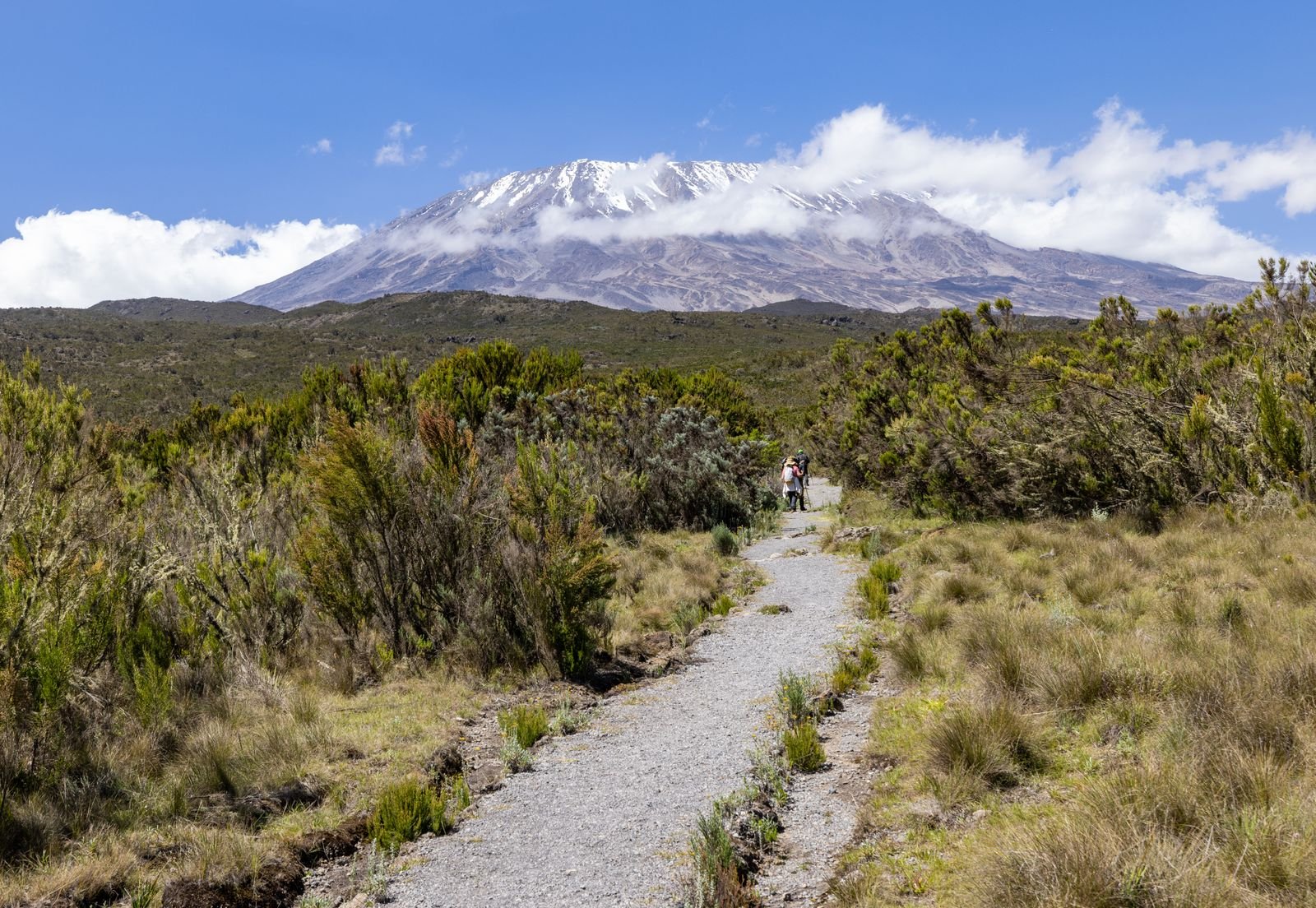
The Rongai route is the only route that approaches Kilimanjaro from the north, close to the Kenyan border. It is quieter than the southern routes, has a gentle gradient and lies on the drier side of the mountain, making it a good choice in the rainy seasons. The descent follows the Marangu route, so you see both sides of the mountain.

Day-by-day itinerary (7 days)
- Day 1: Rongai Gate to Simba Camp. A gentle walk through pine plantations and forest edges.
- Day 2: Simba Camp to Second Cave. Through moorland with views back towards the Kenyan plains.
- Day 3: Second Cave to Kikelewa Camp. A walk across the moorland towards Mawenzi.
- Day 4: Kikelewa Camp to Mawenzi Tarn. A short, steep climb to a beautiful camp beneath the jagged peaks of Mawenzi.
- Day 5: Mawenzi Tarn to Kibo Hut. Across the Saddle to base camp.
- Day 6: Summit day. Up to Gilman's Point and Uhuru Peak, then descend to Horombo Hut.
- Day 7: Horombo Hut to Marangu Gate. Descend through the rainforest.
Scenery and wildlife
The lower slopes are less lush than the southern rainforest, but you may see wildlife such as colobus monkeys on the first day. The views of Mawenzi and across the Saddle are spectacular.
Difficulty
Rongai is moderate, with a steady gradient. Summit night from Kibo Hut is steep and demanding, as on all routes. The seven-day version includes Mawenzi Tarn and improves acclimatisation.
Accommodation
Rongai is a camping route on the way up. On the descent you stay at Horombo Hut on the Marangu route, or in tents nearby.
Getting to the start
The Rongai Gate is a longer drive from Moshi or Arusha than the southern gates, usually around three to four hours. Your transfer is included in our climbs.
Our 7-day Rongai climb includes park fees, an experienced crew and transfers.
What to expect each day
Days begin with hot drinks and breakfast, followed by four to six hours of walking. The pace is slow and steady, with regular breaks. Porters carry your main bag and set up camp before you arrive, so afternoons are free to rest and enjoy the views. Your guide checks your health every evening.
Best time to climb Rongai
Rongai can be climbed year-round and is a good choice in the shoulder and rainy months.
Food and support
As on all our climbs, a cook prepares fresh meals throughout, and the crew provides treated drinking water and hot water for washing each day. Guides carry emergency oxygen and a first-aid kit and check your health daily. On the quieter Rongai trails, you will often have campsites largely to yourselves, which makes evenings especially peaceful.
Frequently asked questions
Why choose Rongai?
The northern side of Kilimanjaro receives less rain than the south, so Rongai is a sensible choice in the shoulder and rainy months. The trails are quieter, giving a greater sense of wilderness, and the gradual ascent is comfortable for most hikers. The acclimatisation night at Mawenzi Tarn is a highlight.
Six days or seven?
The six-day version skips Mawenzi Tarn and goes more directly to Kibo Hut. We recommend seven days, as the extra night at altitude improves acclimatisation and the Mawenzi Tarn camp is one of the most beautiful on the mountain.
Is Rongai easier than Machame?
Rongai has a gentler gradient and no Barranco Wall, but summit night is equally demanding.
Is Rongai good in the rainy season?
Yes, the northern side is drier than the south.
How busy is Rongai?
It is one of the quieter routes on the mountain.
Where does Rongai descend?
It descends on the Marangu route.
Thinking about the climb? Send us your dates and our team will recommend the right route, or see all our Kilimanjaro climbs.
Rongai Route Guide tours

Marangu Route 6 Days
Kilimanjaro Book now

Kilimanjaro Trekking, 7 Days (Machame Route)
Kilimanjaro Book now

Kilimanjaro Trekking, 6 Days (Umbwe Route)
Kilimanjaro Book now


Every traveller is different. Let our experts craft a custom itinerary that matches your travel style and expectations.
Let's get started